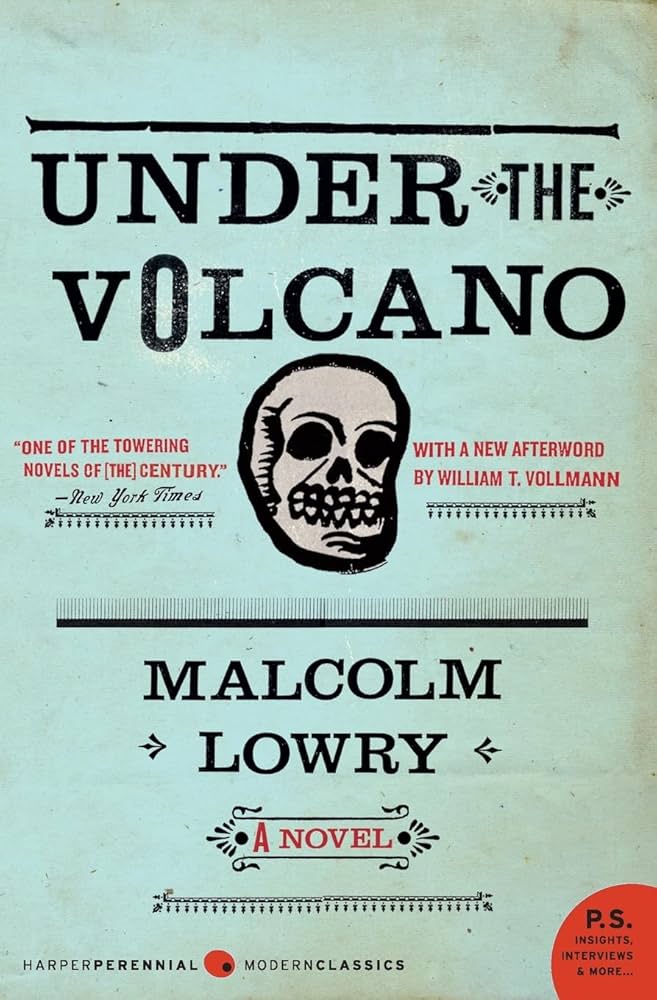
Under the Volcano
Malcolm Lowry
Finished May 24, 2026
Obviously brilliant, with just enough that grates to hold it back. Only the chapters that focus on Hugh feel like they have energy and life. It’s unclear to me why Yvonne comes back at all, and the farmhouse fantasy is trite. The depiction of alcoholism, failed love, and broken promises feels so real, and so powerful, that I understand my so many critics hold this up with the other great modernists, but I’m not on the same wavelength.
Yvonne, or something woven from the filaments of the past that looked like her, was working in the garden, and at a little distance appeared clothed entirely in sunlight. Now she stood up straight—she was wearing yellow slacks-and was squinting at him, one hand raised to shield her eyes from the sun.
Every afternoon, on the stroke of six and eight bells respectively, it was at first Hugh’s duty, his mate being sick, to run in from the galley, first to the bosun’s mess and afterwards to the crew, what the bosun called, with unction, “afternoon tea.” With tabnabs. The tabnabs were delicate and delicious little cakes made by the second cook. Hugh ate them with scorn. Imagine the Sea Wolf sitting down to afternoon tea at four o’clock with tabnabs!